
A dental office expansion is one of the biggest investments a practice owner can make. Whether you’re considering remodeling your current office, adding operatories, or relocating to a larger space, the decision affects your finances, patient experience, and long-term growth.
In 2026, many dentists are facing this exact question. Patient demand is increasing in many markets, digital technology requires additional space, and practices are hiring larger teams than ever before. At the same time, construction costs, interest rates, and operating expenses remain higher than they were just a few years ago.
Because of these factors, expanding too early—or waiting too long—can both become expensive mistakes.
So, how do you know when the time is right?
The answer isn’t based on intuition alone. Instead, it comes from evaluating your practice’s performance, financial health, and future goals.
Why More Dentists Are Considering a Dental Office Expansion
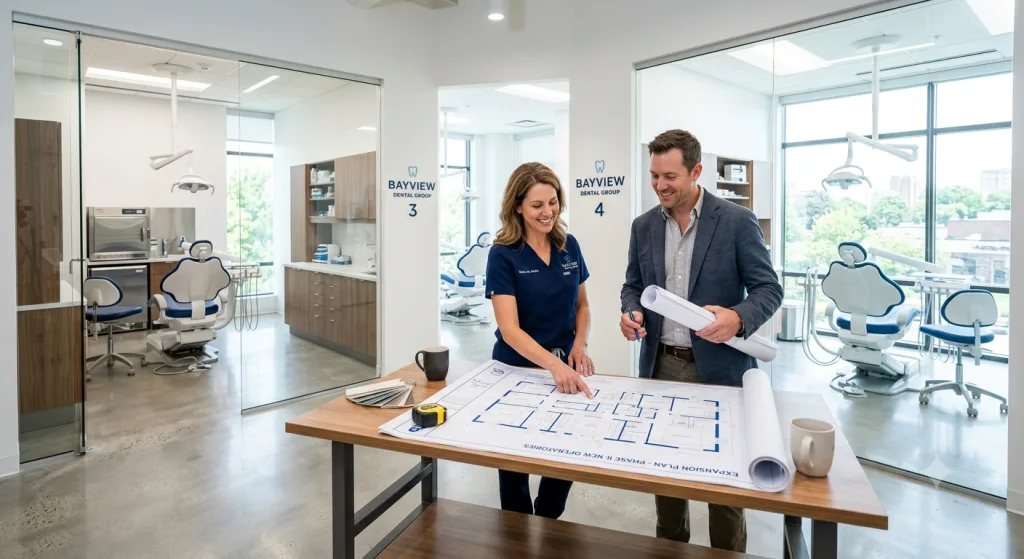
Many successful practices eventually reach a point where physical space limits future growth.
At first, this may appear as a minor inconvenience. Perhaps appointment schedules become harder to manage, treatment rooms stay occupied all day, or new equipment no longer fits comfortably inside the office.
However, over time, these small issues can begin affecting efficiency, patient satisfaction, and profitability.
A growing dental practice often experiences:
- Fully booked schedules weeks in advance
- Limited room for additional providers
- Longer patient wait times
- Difficulty adding new services
- Staff working in crowded spaces
If several of these situations sound familiar, your office may be approaching its capacity.
According to the American Dental Association, facility planning should support both operational efficiency and long-term practice goals.
External Resource:
https://www.ada.org/resources/practice/practice-management
Signs Your Growing Dental Practice Has Outgrown Its Space
Not every busy office needs to expand immediately.
However, certain indicators suggest your current location may be limiting future opportunities.
Your Schedule Is Constantly Full
If your appointment book remains consistently full despite efficient scheduling, your practice may have reached its operational limit.
While staying busy is positive, consistently turning away patients or delaying appointments can reduce future revenue and encourage patients to seek care elsewhere.
Adding treatment capacity may allow your practice to continue growing without sacrificing patient experience.
You Cannot Add Another Provider
Many dentists eventually want to hire an associate or another hygienist.
Unfortunately, that becomes difficult when every operatory is already occupied.
If staffing opportunities are limited by physical space rather than patient demand, expansion may generate substantial long-term returns.
New Technology No Longer Fits
Modern dentistry depends on technology.
Digital scanners, CBCT systems, milling units, and additional sterilization equipment all require valuable square footage.
As practices adopt more advanced equipment, existing layouts often become less efficient.
Rather than forcing new technology into an outdated floor plan, expanding or remodeling may improve both workflow and productivity.
Remodel or Relocate?
One of the biggest decisions involves choosing between remodeling your existing office or moving into a larger location.
Each option offers unique advantages.
A remodel typically allows you to remain in the same community while improving efficiency and patient experience.
Common renovation projects include:
- Adding operatories
- Updating reception areas
- Expanding sterilization rooms
- Improving patient flow
- Modernizing treatment spaces
On the other hand, relocation may become necessary if your current property cannot accommodate future growth.
Although moving generally requires a larger investment, it may provide greater long-term flexibility.
Ultimately, the best option depends on patient demographics, available real estate, and projected growth.
Understanding Dental Office Remodel Cost
One reason dentists postpone expansion is uncertainty about the dental office remodel cost.
Renovation expenses vary significantly depending on project scope.
Factors include:
- Construction costs
- Plumbing and electrical upgrades
- New cabinetry
- Flooring and finishes
- Additional equipment
- Technology infrastructure
- Permits and inspections
Because every office is different, obtaining professional estimates early in the planning process is essential.
More importantly, dentists should evaluate remodeling costs alongside the additional revenue the upgraded space may generate.
A remodel that improves production capacity often delivers stronger long-term value than simply reducing upfront expenses.
How to Calculate the ROI of a Dental Office Expansion
Every expansion should be evaluated as a business investment.
Instead of asking, “Can I afford this?” many dentists benefit from asking, “What return can this investment generate?”
Potential revenue increases may come from:
- Additional treatment rooms
- Higher patient capacity
- New clinical services
- Increased hygiene production
- Improved scheduling efficiency
- Greater treatment acceptance
At the same time, consider expenses such as financing costs, staffing, utilities, and maintenance.
When projected revenue exceeds long-term operating costs, expansion often becomes financially attractive.
Looking at both sides of the equation helps practice owners make informed decisions rather than emotional ones.
Preserve Cash Flow While Growing
One of the biggest concerns surrounding expansion is protecting daily operations.
Large renovation projects often require substantial capital, and paying entirely out of pocket can reduce liquidity.
Healthy cash flow remains essential for covering:
- Payroll
- Supplies
- Marketing
- Equipment maintenance
- Emergency expenses
Using all available cash for construction may create unnecessary financial pressure, even if the expansion is expected to generate future growth.
Because of this, many dentists choose financing solutions that preserve working capital while allowing projects to move forward.
Financing a Dental Office Expansion
Financing can provide flexibility during periods of growth.
Rather than delaying improvements for several years, structured financing allows practices to expand while maintaining financial stability.
At IMS Financial, we help dentists finance practice expansions, remodels, equipment purchases, and other growth initiatives with solutions designed specifically for dental professionals.
Strategic financing can help practices:
- Preserve emergency cash reserves
- Spread project costs over time
- Invest in technology sooner
- Improve operational efficiency
- Continue growing without disrupting daily cash flow
The goal is not simply borrowing money. Instead, it is creating a financial structure that supports sustainable growth.
Questions to Ask Before Expanding
Before making a final decision, every practice owner should consider several important questions.
For example:
- Is patient demand consistently increasing?
- Can current space support future technology?
- Will additional operatories increase production?
- Are staffing limitations caused by space constraints?
- Does projected revenue justify the investment?
- Will financing preserve healthy cash flow?
Answering these questions objectively provides a stronger foundation for planning.
It also reduces the likelihood of making costly decisions based solely on short-term growth.
The Importance of Financial Planning
Successful expansion depends on more than construction plans.
Strong financial planning helps dentists understand whether the investment aligns with long-term business goals.
This includes reviewing:
- Current cash flow
- Existing debt obligations
- Projected collections
- Growth forecasts
- Capital requirements
- Financing options
Practices that complete this analysis before expanding are often better prepared to manage both expected and unexpected challenges throughout the project.
Final Thoughts
A dental office expansion can be one of the most rewarding investments a practice makes. Additional space often supports higher production, improved patient experiences, greater operational efficiency, and long-term business growth.
However, timing matters.
Expanding too early may strain finances, while waiting too long can limit revenue and reduce patient satisfaction.
By evaluating patient demand, office capacity, projected ROI, and financing options, dentists can make confident decisions that support sustainable growth for years to come.
With thoughtful planning and the right financial strategy, expanding your practice can become an investment in both your business and your future.
👉 Explore our financial planning resources for dental practices and start the year with confidence.
👉 Learn more to receive additional information about flexible financing solutions for dental practices.
👉 Read our client stories to see how other dental practices have navigated similar financial challenges.


