
Dental lab fees are a necessary expense for many dental practices. Crowns, bridges, implants, dentures, aligners, cosmetic restorations, and other procedures often depend on an outside laboratory to deliver the final product.
But when dental laboratory costs continue to rise, they can quietly put pressure on your practice’s profit margins.
The important question isn’t simply, “How much are my lab fees?”
It’s:
Are my lab expenses appropriate for my production, procedures, pricing, and overall practice model?
For some practices, higher lab costs are simply the result of performing more complex and profitable procedures. For others, inconsistent pricing, low case acceptance, inefficient workflows, or outdated technology can make laboratory expenses harder to absorb.
Here’s how to evaluate your dental lab fees and determine whether bringing certain procedures in-house could improve your practice’s financial performance.
How Much Should a Dental Practice Spend on Lab Fees?
There is no single lab-fee percentage that works for every dental practice.
The procedures you perform, your patient mix, specialty, production levels, and use of technology can all affect your dental laboratory costs.
The American Dental Association reports that most general practices should expect to spend approximately 6% to 8% of collections on laboratory services, excluding CAD/CAM and orthodontic costs. Practices that are heavily focused on restorative or full-mouth cosmetic dentistry may spend more.
That means a practice with higher laboratory expenses is not automatically inefficient.
A restorative practice performing a large number of crowns, bridges, implants, and cosmetic cases will naturally have a different cost structure than a practice focused primarily on preventive care and basic restorative procedures.
The goal isn’t necessarily to have the lowest lab expenses. The goal is to make sure your lab expenses make financial sense for the revenue they help generate.
Dental Lab Fees Are Only One Part of Your Overhead
It’s easy to look at a large laboratory invoice and assume it is the problem.
But dental practice profitability depends on the relationship between revenue and all operating expenses.
Your practice overhead may include:
- Payroll
- Dental supplies
- Laboratory services
- Rent or mortgage
- Insurance
- Utilities
- Marketing
- Software
- Equipment payments
- Repairs and maintenance
- Professional services
- Financing costs
The ADA has emphasized that practices need to look at the full picture of fixed and variable expenses when evaluating profitability.
That is why cutting lab fees alone may not solve a practice’s financial problems.
If your laboratory expenses are high but your procedures are highly profitable, the expense may be justified.
If your lab fees are moderate but your pricing, case acceptance, or scheduling is weak, the bigger opportunity may be somewhere else.
Look at Lab Fees by Procedure, Not Just by Month
One of the best ways to understand dental laboratory costs is to stop looking only at the total monthly bill.
Instead, break your lab spending down by procedure.
For example, look at:
- Crowns
- Bridges
- Implant restorations
- Dentures
- Partials
- Veneers
- Aligners
- Full-mouth rehabilitation
- Cosmetic cases
Then compare the laboratory cost with the revenue generated by each type of treatment.
This can reveal something your monthly financial statement may not show.
You may discover that one category has higher lab fees but produces excellent margins, while another procedure has relatively low laboratory costs but takes significant chair time and staff resources.
Cost alone doesn’t determine profitability.
The better question is what remains after all direct and indirect costs are considered.
Are You Pricing Procedures Correctly?
High dental lab fees can become a bigger problem when practice fees haven’t kept pace with rising costs.
Imagine a practice that charges $1,500 for a procedure but pays $300 to the laboratory.
At first glance, the $300 lab fee may seem reasonable.
But what happens when you also account for:
- Doctor production time
- Assistant time
- Supplies
- Sterilization
- Facility costs
- Scheduling time
- Insurance adjustments
- Credit card fees
- Other overhead
The laboratory invoice is only one part of the cost of delivering the procedure.
This is why dentists should periodically review whether their fees still support their desired margins.
Your fee schedule should reflect the actual economics of running your practice, not simply what you charged several years ago.
Higher Lab Fees Don’t Always Mean Lower Profit
This is an important distinction.
A dental practice that spends more on laboratory services may actually be more profitable than one that spends less.
Consider two hypothetical practices.
Practice A performs a high volume of restorative and cosmetic procedures. It has significant lab expenses but generates strong production and collections from those procedures.
Practice B has lower laboratory expenses but also performs fewer high-value procedures and has lower overall production.
Practice A could have higher lab costs while still generating more profit.
This is why dentists should avoid using a simple rule such as:
“My lab expenses are too high, so I need to cut them.”
Instead ask:
“Are the procedures associated with these lab expenses producing an acceptable return for my practice?”
Review Your Dental Lab Relationships
Another way to reduce dental practice expenses is to evaluate your laboratory relationships.
This doesn’t necessarily mean choosing the cheapest laboratory.
Quality, turnaround time, communication, consistency, materials, technology, and remake rates all matter.
A laboratory that charges slightly more but produces fewer remakes may ultimately cost less than a cheaper lab that requires frequent corrections.
When reviewing your laboratory expenses, consider:
1. Remake Rates
How often are cases returned because of fit, shade, design, or other issues?
2. Turnaround Time
Are delays creating additional appointments or disrupting your schedule?
3. Communication
How efficiently can your team communicate with the laboratory when adjustments are needed?
4. Case Quality
Are you consistently receiving the quality your patients and practice require?
5. Pricing
Are you receiving competitive pricing for your volume and type of cases?
The cheapest lab isn’t always the most cost-effective lab.
Could You Bring Some Procedures In-House?
Technology has changed the economics of dental laboratories.
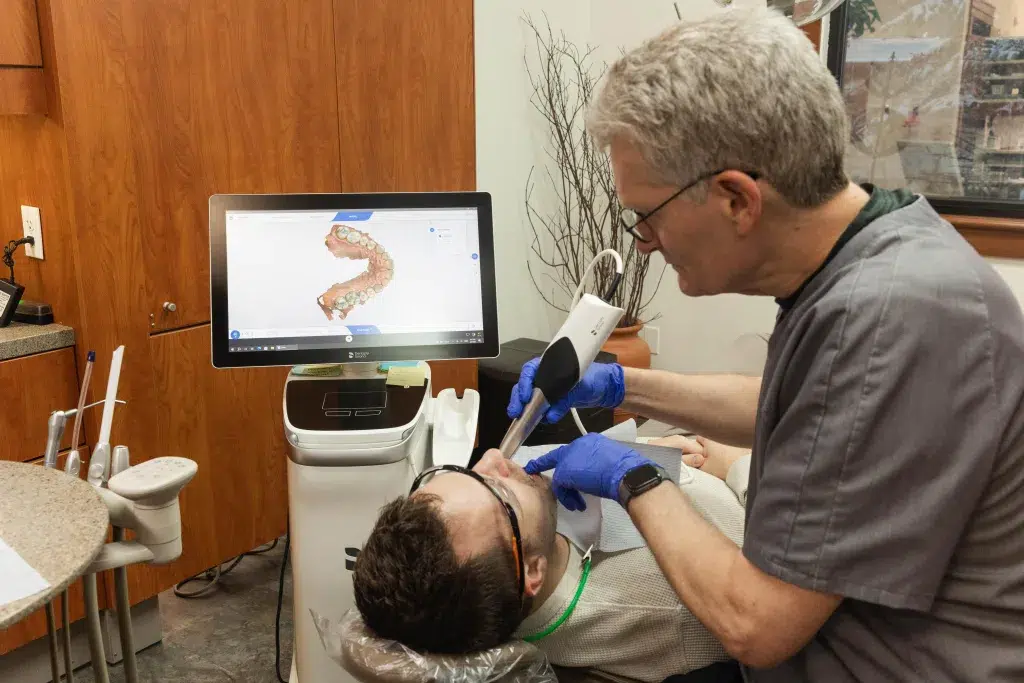
Depending on the practice, digital scanners, CAD/CAM systems, milling equipment, 3D printers, and same-day dentistry technology can allow certain processes to move in-house.
That can potentially reduce dependence on an outside laboratory.
But there is an important distinction:
Buying equipment does not automatically save money.
The equipment itself has a cost.
You may also need to account for:
- Equipment financing
- Software subscriptions
- Maintenance
- Materials
- Training
- Staff time
- Repairs
- Updates
- Utilization
- Depreciation
- Space requirements
The right question isn’t:
“Can I eliminate this lab fee?”
It’s:
“Would investing in this technology produce enough additional value to justify the total cost of owning it?”
Calculate the Break-Even Point Before Buying Equipment
Suppose a dentist is considering investing in CAD/CAM technology.
The dentist currently spends $4,000 per month on certain laboratory services that could potentially be handled in-house.
That doesn’t mean buying a $100,000 system automatically makes financial sense.
The practice needs to calculate the expected savings and additional revenue against the total cost of the technology.
Consider:
Current annual lab expense
versus
Expected annual savings + additional production
Then account for the annual cost of:
- Equipment payments
- Software
- Materials
- Maintenance
- Training
- Repairs
- Financing costs
The result gives you a much more realistic picture of the investment.
Don’t Forget About Utilization
One of the biggest mistakes dentists can make is buying technology that isn’t used enough.
A piece of equipment may look attractive because it can perform a particular procedure faster or reduce outside laboratory costs.
But if the practice only uses it a few times each month, the economics may not work.
Before investing, estimate:
How many cases will we realistically process each month?
Then ask:
- How much would those cases cost through an outside lab?
- How much would the in-house process cost?
- How much chair time could be saved?
- Could we increase case acceptance?
- Could we offer additional procedures?
- Would patients value faster treatment?
- Could the equipment create additional production?
Technology becomes more financially attractive as utilization increases.
Technology Can Create Revenue, Not Just Reduce Costs
Dentists sometimes evaluate equipment only by asking how much money it can save.
That’s only half the equation.
New technology may also allow a practice to:
- Offer procedures it couldn’t previously perform
- Complete certain treatments faster
- Improve patient experience
- Increase case acceptance
- Reduce outside lab dependence
- Improve scheduling flexibility
- Increase production capacity
For example, a digital workflow may allow a practice to offer same-day treatment that previously required multiple appointments.
The financial benefit may therefore come from both lower costs and additional revenue.
That’s why a proper ROI analysis should consider both sides.
Should You Finance Dental Technology?
If the numbers support bringing certain procedures in-house, the next question is how to pay for the equipment.
Paying cash may seem attractive because it avoids financing costs.
But using a large portion of your practice’s cash reserves can create another problem.
You still need working capital for:
- Payroll
- Rent
- Supplies
- Marketing
- Repairs
- Unexpected expenses
- Seasonal fluctuations
Dental equipment financing can allow a practice to acquire technology while preserving cash for ongoing operations.
The right financing structure depends on the equipment, amount being financed, expected return, practice cash flow, and repayment terms.
The goal isn’t simply to get approved.
The goal is to structure the investment in a way that your practice can comfortably support.
When Financing Can Make More Sense Than Paying Cash
Consider a practice that wants to invest $100,000 in new technology.
The practice has $150,000 in available cash.
Paying cash would eliminate the financing expense, but it would also leave only $50,000 in liquidity.
Financing the equipment could preserve more working capital while spreading the investment over time.
That doesn’t automatically make financing the better choice.
The dentist still needs to compare:
- Financing costs
- Expected equipment savings
- Expected additional production
- Monthly payment
- Available cash reserves
- Expected useful life of the equipment
The right decision depends on the practice’s overall financial position.
How to Reduce Dental Practice Expenses Without Hurting Patient Care
If your goal is to reduce dental practice expenses, start with the numbers instead of making across-the-board cuts.
Review your expenses regularly and identify where money is being spent.
Then ask:
Is this expense helping the practice generate revenue, improve efficiency, maintain quality, or provide better patient care?
If the answer is yes, the expense may be justified.
If the answer is no, it deserves closer attention.
For laboratory costs specifically, consider:
- Reviewing lab fees by procedure.
- Tracking remake rates.
- Comparing laboratory pricing and quality.
- Reviewing your procedure fees.
- Measuring case profitability.
- Evaluating equipment utilization.
- Calculating the ROI of bringing procedures in-house.
- Reviewing financing options before making a large equipment purchase.
This approach is more effective than simply trying to spend less.
The Goal Isn’t Lower Lab Fees. It’s Better Margins.
Dental laboratory costs are an important part of practice overhead, but they shouldn’t be viewed in isolation.
A practice can have higher lab expenses and still be highly profitable.
Another practice can have lower lab expenses and struggle financially.
What matters is the relationship between cost, production, collections, efficiency, and profit.
Before changing laboratories, increasing fees, or purchasing expensive technology, look at the complete financial picture.
And if new technology could improve your workflow or allow you to bring certain procedures in-house, evaluate the investment based on realistic utilization, expected savings, potential additional revenue, and the impact on cash flow.
How IMS Financial Can Help
Investing in dental technology can be a significant decision, especially when the equipment could change how your practice delivers care.
IMS Financial provides financing solutions for dental professionals looking to invest in equipment and technology while managing their practice’s cash flow.
Depending on your needs, financing may be available for equipment such as digital X-ray systems, CBCT imaging, CAD/CAM technology, operatory equipment, sterilization systems, and other practice technology.
Before moving forward with any major investment, it’s important to understand the total cost, expected return, and financing structure.
Final Thoughts
Dental lab fees aren’t necessarily a problem.
Unmanaged dental lab fees can be.
If your laboratory expenses are increasing, don’t automatically assume you need to find a cheaper laboratory.
Start by understanding where the money is going, which procedures generate the most value, and whether your current pricing supports your costs.
Then evaluate whether technology could make certain workflows more efficient or allow you to bring selected procedures in-house.
And if the investment makes financial sense, consider how financing could help you acquire the technology without putting unnecessary pressure on your practice’s working capital.
The best financial decision isn’t always the one that produces the lowest expense.
It’s the one that helps your practice protect margins, improve efficiency, and grow profitably.
👉 Explore our financial planning resources for dental practices and start the year with confidence.
👉 Learn more to receive additional information about flexible financing solutions for dental practices.
👉 Read our client stories to see how other dental practices have navigated similar financial challenges.


